


Basketball in 2026 has become the world’s most dynamic betting ecosystem thanks to the integration of artificial intelligence in odds modeling and the explosion of “micro-betting” markets. It is no longer just about predicting who will win, but about understanding possession efficiency and Load Management. For the professional bettor, success lies in differentiating NBA metrics (volume and individual talent) from EuroLeague metrics (tactics and collective defense).

Market Analysis: NBA vs. EuroLeague
In 2026, the divergence between American and European basketball is at its peak, requiring opposing strategies:
- NBA (High Possession and Volume): Played at a rhythm of 100-105 possessions per game. Here, the value lies in the Pace. A team coming off a Back-to-Back (two games in consecutive nights) tends to lower its defensive efficiency, which inflates the “Total Points Over” market.
- EuroLeague (Tactical Rigor): With only 40 minutes of play and FIBA rules, defensive efficiency is superior. In 2026, favorite teams like Panathinaikos or Olympiacos dominate through rebound control. The “Total Points Under” market is usually more profitable in high-pressure games or European classics.
Advanced Statistics and Efficiency (xP)
The modern bettor ignores simple scoring averages and focuses on efficiency metrics:
- Offensive and Defensive Rating: Points scored/conceded per every 100 possessions. In 2026, if a team has an Offensive Rating of 120 but faces an elite defense (Rating 105), the “Point Handicap (-)” market is usually overvalued in favor of the offense.
- True Shooting Percentage (TS%): This metric measures real shooting efficiency (including free throws and three-pointers). A player with a TS% of 65% is a safe bet for the “Player Points (Over)” market, even if they have a low shot volume.
- Usage Rate: In the 2026 NBA, players like Luka Dončić or Victor Wembanyama have usage rates exceeding 35%. If a key teammate is injured, that rate rises, turning their “Over” bets on rebounds or assists into golden opportunities.
“Micro-Betting” and Live Betting Strategies
Basketball is a game of “runs.” In 2026, live betting is where the highest ROI is generated:
- The 4th Quarter Strategy: Historically, 19% of NBA games are decided in the last 5 minutes. If a favorite is losing by 8-10 points at the start of the last quarter, the “Moneyline” odds are usually excessive. 2026 models show that elite teams close 10-point gaps in less than 4 minutes with a 40% success rate.
- Race to X Points: Betting on who will reach 20 or 50 points first based on the starting lineup. Teams with better starters dominate the first quarter, while second units (the bench) are often the weak point for first-half handicaps.
Player Props in 2026
The current trend is the “Same Game Parlay” focused on players:
| Market | Critical Factor | Value in 2026 |
| Rebounds | Box-out efficiency | Role players against “small-ball” lineups |
| Assists | Teammates’ shooting potential | Elite point guards against zone defenses |
| 3-Pointers Made | Spacing | Corner 3 specialists |
The Logistics Factor: Rest and Travel
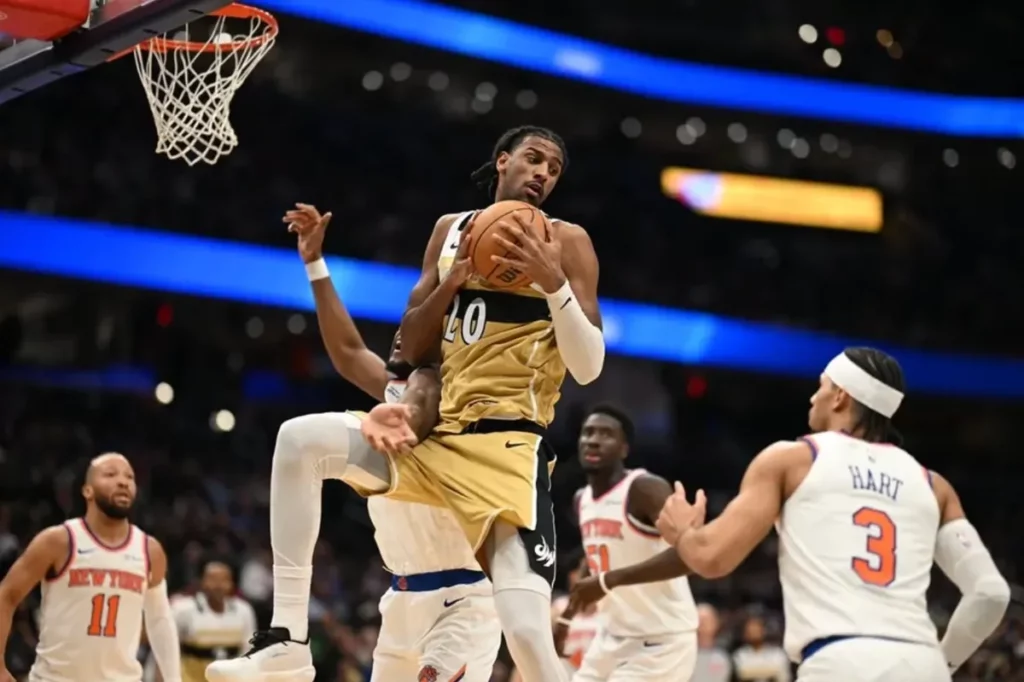
In the 2025-2026 NBA, the calendar remains the bettor’s greatest enemy:
- 3 in 4 (Three games in four nights): Accumulated fatigue destroys long-range shooting accuracy. Betting on a team’s “3-Pointers Under” in their third road game is a standard professional tactic.
- Home Court Advantage: Although it has decreased, in 2026 it remains at 53.7%. However, in “distraction” cities (Miami, Las Vegas, New York), young visiting teams tend to perform 5% worse in morning sessions.
Bankroll Management: The Kelly Model
Given the high frequency of games (82 in NBA, 34-38 in EuroLeague), the Fractional Kelly Criterion (1/4 or 1/2) is recommended. Basketball has high variance due to the three-point shot; a bad night from the 7.24m line can ruin a perfect model. Do not risk more than 2% of your bank on a single handicap.