


The phenomenon of Crash Games has fundamentally redefined the landscape of modern iGaming and crypto-gambling. Moving away from the static nature of traditional slot machines, this genre introduces a high-velocity, interactive experience that leverages real-time decision-making, social competition, and the psychological thrill of “the big win.” In this industrial-grade analysis, we explore the mechanics, mathematical foundations, SEO landscapes, and the future trajectory of this dominant gaming vertical.
The Core Concept: Mechanics of Risk and Reward
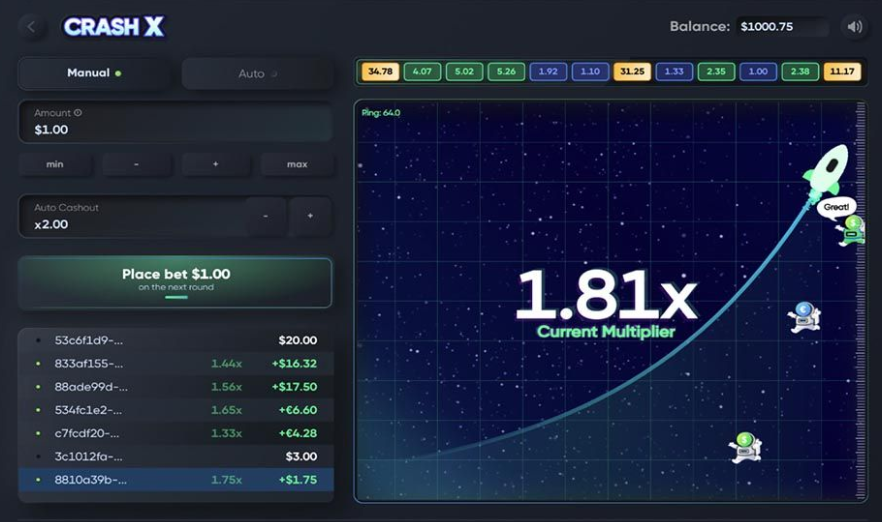
At its heart, a Crash Game is a real-time betting event where a multiplier starts at 1.00x and increases exponentially. The objective is for the player to “Cash Out” before the multiplier “crashes” randomly.
The brilliance of the mechanic lies in its simplicity. Every millisecond that the player stays in the round, their potential profit increases, but so does the probability of losing the entire stake. This creates a unique tension—a battle between greed and risk aversion that is absent in traditional RNG-based games.
Key Gameplay Components
- The Multiplier Curve: The visual representation of increasing value.
- The Manual Cash Out: The player’s primary tool for interacting with the game.
- Auto-Bet & Auto-Cash Out: Automation tools for executing specific betting strategies.
- Betting History: A transparent log of previous outcomes used for trend analysis.
- Social Lobby: A real-time list of active bets and cash-out points of other players.
Comparative Analysis of Leading Crash Game Providers
To understand the market diversity in 2026, it is essential to compare the technical specifications of the top industry players.
| Provider | flagship Title | RTP | Max Multiplier | Key Feature |
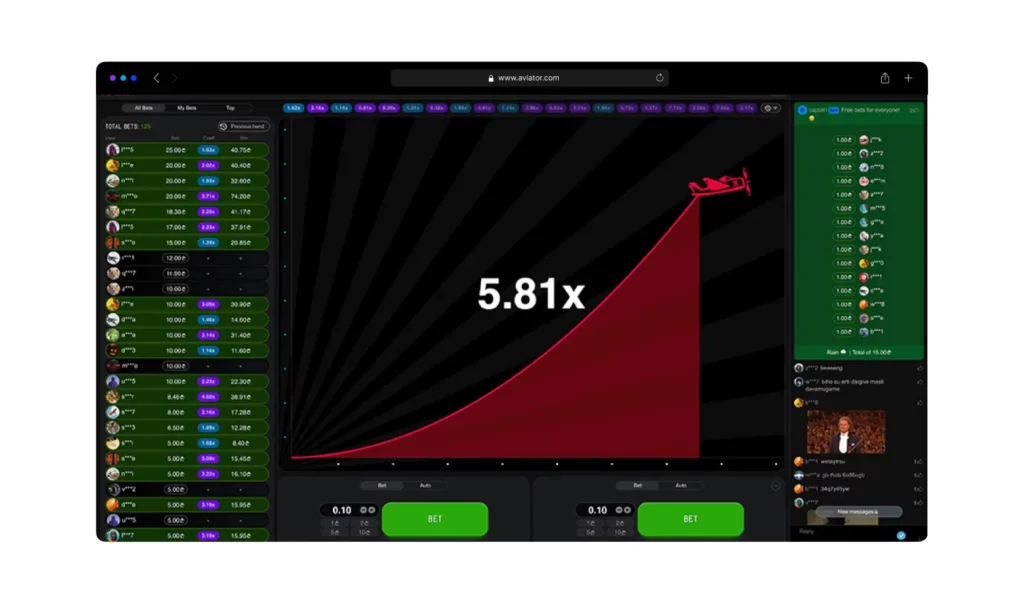
| Spribe | Aviator | 97.0% | 10,000x | Social “Aposta” Chat |
| SmartSoft | JetX | 96.7% | Unlimited | Progressive Jackpot |
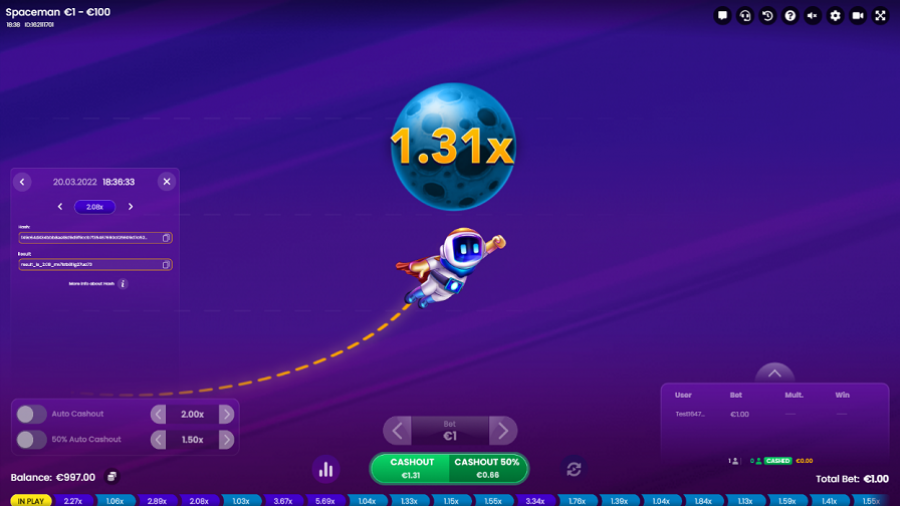
| Pragmatic Play | Spaceman | 96.5% | 5,000x | 50% Cash-out option |
| BGaming | Space XY | 97.0% | 10,000x | Minimalist Interface |
| Galaxsys | Rocketon | 98.0% | 100,000x | Half-Cashout Feature |
Evolution of the Genre: From Graphs to Gamification
The history of Crash Games is a journey from niche crypto-tooling to mainstream entertainment.
The Cryptographic Roots
The first iterations, like Bustabit, were purely functional. They featured a simple line graph moving across a coordinate plane. These were designed for the early Bitcoin community, prioritizing transparency and provable fairness over aesthetics.
The Era of Gamification
Titles like Aviator and JetX introduced visual metaphors—planes taking off or rockets launching. This transition was pivotal, as it translated abstract mathematical growth into a relatable narrative, making the genre accessible to the average casino player.
The Modern Era of 2026
Current trends focus on high-fidelity 3D graphics, narrative-driven environments, and deep social integration. We now see “Crash” mechanics applied to diverse themes, from deep-sea exploration to galactic warfare, often featuring RPG-like progression systems.
Mathematical Architecture and Fairness
Understanding the “math under the hood” is essential for both operators and professional players.
Provably Fair Technology
Most reputable Crash Games utilize a cryptographic algorithm known as Provably Fair. This system generates the crash point using three variables: a Server Seed, a Client Seed (from the players), and a Nonce.
Standard RTP Distribution vs. Crash Dynamics
- Instant Crash (1.00x): Occurs in approximately 1% to 3% of rounds, representing the immediate house edge.
- Low Multipliers (1.01x – 1.50x): High-frequency occurrences (approx. 40-50% of rounds).
- Medium Multipliers (2.00x – 10.00x): Medium frequency; the primary target for Martingale players.
- High Multipliers (10.00x – 100.00x): Low frequency; often triggered by specific seed transitions.
- Golden Multipliers (100.00x+): Rare events that drive viral marketing and “big win” clips.
Advanced Player Strategies and Their Efficacy
While no strategy can overcome the mathematical house edge in the long run, several tactical approaches are popular among the community.
Strategic Archetypes
- The “Safety First” (Conservative):
- Cash out target: 1.10x – 1.30x.
- Probability: High.
- Risk: Vulnerable to 1.00x instant crashes.
- The “Multiplier Chaser” (High Volatility):
- Cash out target: 50x+.
- Probability: Very Low.
- Requirement: Large bankroll to survive long losing streaks.
- The “Statistical Arbitrage”:
- Method: Watching the history for “cool-down” periods after a 100x+ win.
- Reality: Gambler’s Fallacy, as each round is mathematically independent.
Psychological Drivers: Why Crash Games Dominate
The explosive growth of this genre is built on several powerful psychological triggers.
The Illusion of Agency
Because the player manually clicks the “Cash Out” button, the brain perceives a level of skill and control. Even though the outcome is predetermined by an RNG, the feeling of “I should have clicked sooner” keeps players engaged far longer than a standard spin button.
Social Validation and FOMO
Live leaderboards showing other players cashing out at 50x or 100x create an intense Fear Of Missing Out (FOMO). Seeing a peer win big in real-time reinforces the belief that a massive multiplier is “due.”
The Near-Miss Effect
When a player cashes out at 1.90x and the crash happens at 1.95x, it triggers a dopamine response similar to a win. The brain views it as a “near success” rather than a failure, encouraging immediate re-entry.
SEO Strategy for Crash Gaming Content
For digital marketers and affiliates, the Crash Games niche is highly competitive. Ranking requires a sophisticated content strategy.
SEO Checklist for Content Optimization
- Title Tags: Include “Strategy,” “Real Money,” and “Provably Fair.”
- Rich Snippets: Use Schema markup for game ratings and RTP stats.
- Internal Linking: Connect crash game guides to “Best Crypto Casinos” pages.
- Visual Assets: High-quality screenshots of interface and win-history charts.
High-Value Keyword Segments
| Segment | Keyword Examples |
| Tutorial-based | “How to play Aviator,” “Crash game rules for beginners” |
| Tactical | “Best crash game strategy 2026,” “Martingale for JetX” |
| Technical | “Provably Fair algorithm explained,” “Crash game predictors” |
| Transactional | “Play Lucky Jet for USDT,” “Highest paying crash games” |
Technical Integration and B2B Considerations
For developers and platforms, the technical demands of Crash Games are unique.
Real-Time Data Streams
Unlike slots, where the server only communicates at the start and end of a spin, Crash Games require constant, low-latency communication via WebSockets to ensure the multiplier remains synchronized across thousands of devices simultaneously.
Backend Infrastructure Requirements:
- Low Latency: Sub-100ms response times for Cash Out requests.
- Concurrency: Handling 50,000+ simultaneous connections per game instance.
- Security: DDOS protection for game servers to prevent interruption of the multiplier growth.
Frequently Asked Questions
Is it possible to predict the crash point?
No. Because of the SHA-256 encryption used in Provably Fair algorithms, the crash point is mathematically impossible to predict or manipulate once the seeds are set.
What is a “Golden Round”?
In player slang, a Golden Round refers to a multiplier that exceeds 100x or even 1000x. These are rare but are the primary marketing hook for the genre.
Are Crash Games legal?
Legality depends on the jurisdiction and the platform’s licensing (such as Curacao or MGA). Always ensure you are playing on a regulated site that adheres to Responsible Gambling standards.
The Future: VR, Metaverse, and Beyond
As we move deeper into 2026, we expect Crash Games to integrate with Virtual Reality (VR) to provide immersive “escape” scenarios. Furthermore, the rise of Web3 allows for NFT-based rewards, where winning a high-multiplier round might grant the player a unique digital asset or skin, bridging the gap between gambling and traditional gaming.