


By February 2026, the Kings League has evolved from a streaming curiosity into a high-stakes, high-frequency betting market. With the expansion into Kings Cup America (Brazil & Mexico) and Kings Cup Europe (Spain, Italy, Germany), and the recent conclusion of the Kings World Cup Nations 2026 in Brazil, bookmakers have been forced to refine their algorithms to account for the league’s disruptive mechanics. For the professional bettor, the Kings League represents a “mathematical playground” where understanding the interaction between game theory and secret weapons is more important than traditional football analysis.
The Real-Time Mechanic: Secret Weapons and Game Theory
Unlike professional 11-a-side football, where momentum is organic, the Kings League features “artificial momentum” shifts that bettors must anticipate.
- The 18th Minute Die Roll: This is the most volatile moment in sports betting. The die determines the format (1vs1, 2vs2, up to 5vs5) for the final minutes of the first half. In 2026, bettors use specialized “Duel Metrics.” If a team like Porcinos FC or Aniquiladores has a high-tier 1vs1 specialist on the pitch, taking the “Next Goal” or “Halftime Winner” line seconds before the roll often yields significant Positive Expected Value (EV+).
- Secret Weapon Interaction: Each team holds a “Secret Card” (Penalty, Shoot-out, Double Goal, Suspension, Star Player, or the new Reverse Penalty). Professional bettors monitor the “Card Status” live. If a team trails by one goal but still holds a “Penalty” card in the 35th minute, their “Live ML” (Moneyline) is often undervalued by general public models that don’t weigh the card’s 85% conversion probability.
- The Reverse Penalty (2026 Rule): The newest strategic layer where a team forces a rival to take a penalty; if the rival scores, it doesn’t count, but if they miss, the team that played the card gets a goal. This has turned the “Penalty Taker” stats into a double-edged sword, creating massive live-swing opportunities for underdogs.
Roster Dynamics: Players 11, 12, and 13
The 2026 season has introduced a “Real Money” transfer market, replacing the old virtual economy. This has stabilized the “Market Value” of players, making them easier to quantify for betting models.
- The Fatigue of the Star Player (Player 12/13): Teams often bring in retired legends (e.g., players of the caliber of Arturo Vidal or veteran icons in the 2026 Cup). Data shows these players have a “15-minute peak.” Betting on “Team Total: Under” in the second half for teams that rely heavily on a single veteran Player 12 is a consistent 2026 strategy.
- The Draft Core (The “Silent” Factor): While stars get the headlines, the 10 draft players provide the defensive structure. Teams with low “Salary Cap Usage” but high “Win-Rate Retention” (like Ultimate Móstoles or G3X FC) are often the most reliable for “Spread Betting” (Handicaps) because their tactical discipline prevents the blowout losses common in more “top-heavy” teams.
The Chaos of the Final Two Minutes (Ballon d’Or Period)
In 2026, the final two minutes of each match feature the “Double Goal” rule, where every goal counts as two. This renders traditional “Handicaps” almost useless in the closing stages.
- The “Total Goals: Over” Trap: Because goals count for two, bookmakers often inflate the “Over/Under” lines in the 37th minute. However, tactical fouling and the “Portero-Jugador” (Fly-Goalkeeper) strategy often lead to either zero goals (due to defensive stalling) or a flurry of three. The value is found in “Live Unders” when a team is leading by 3+ points and can effectively “kill” the clock under Kings League rules.
- The President’s Penalty: Every chairman (like Ibai Llanos or DjMaRiiO) has the right to a penalty. In 2026, professional models track the “Presidential Conversion Rate.” If a president is physically present at the venue, the “Team Total” odds should be adjusted by approximately +0.75 expected goals.
Key 2026 Performance Metrics for Bettors
To beat the house in the Kings League, you must prioritize “Media Football” metrics over FIFA/UEFA standards:
| Metric | 2026 Benchmark | Strategic Application |
| Shoot-out Conversion | > 65% | Crucial for “Draw No Bet” markets as every draw ends in a shoot-out. |
| Power Play Efficiency | > 40% | Measures how well a team scores during an opponent’s “Suspension” card. |
| First 5 Minutes xG | High Variance | Predicts which teams start aggressive to force early “President Penalties.” |
| Save Percentage (GK) | > 70% | Goalkeepers like Matías Herrera are the most undervalued assets in handicap markets. |
Regional Variance: Spain vs. Americas vs. Nations
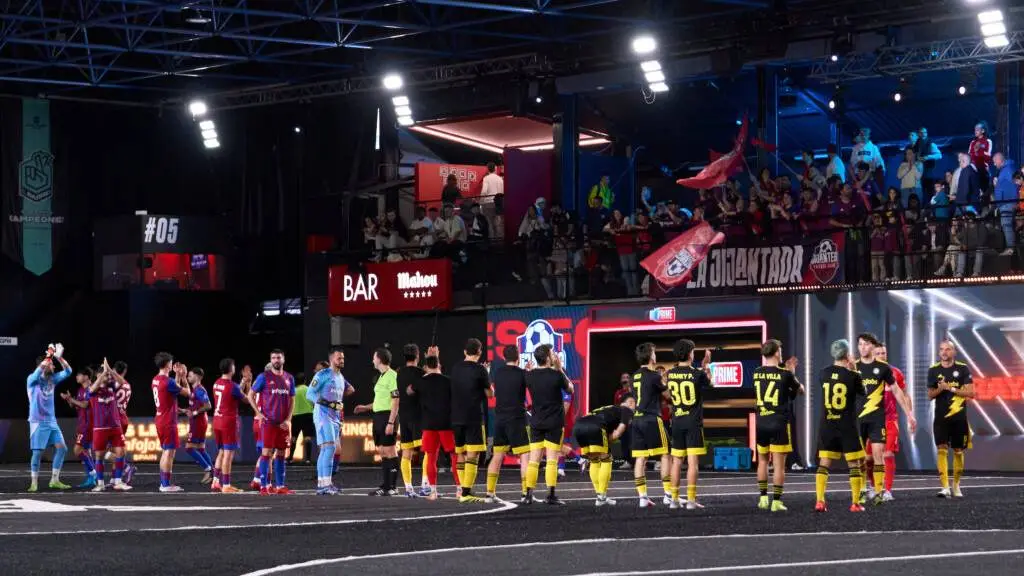
The 2026 betting landscape is now split across different regional “styles.”
- Kings Cup Spain: Highly tactical with lower average scoring (approx. 7.2 goals per game). Value is often found in “Defensive Unders.”
- Kings Cup America: Played at a significantly higher pace with a focus on individual flair. Average scoring in the Mexico and Brazil conferences is closer to 9.5 goals per game.
- World Cup Nations: The 2026 tournament in São Paulo showed that international “Synergy” is low. Betting on “Total Cards (Sin Bins)” was highly profitable as players from different leagues struggled to adapt to the officiating styles of guest referees.
Bankroll Management and Volatility Control
Because the Kings League is designed for “Entertainment Shock,” the variance is higher than in any other professional sport.
- Unit Sizing: It is recommended to use 0.25u to 0.5u (quarter or half units). The “Double Goal” or a “Joker Card” can wipe out a statistically perfect bet in 10 seconds.
- The “Live Only” Rule: Professional 2026 bettors rarely place “Pre-Match” bets on the Kings League. The most profitable window is the “Card Reveal” at the start of the match and the “Die Roll” in the 18th minute. Information asymmetry is your only edge; watching the stream with zero latency is mandatory to beat the bookmaker’s automated line shifts.