


The UEFA Nations League has fundamentally reshaped the international football calendar in 2026, turning what were once meaningless friendlies into a high-stakes market with fragmented liquidity. For the betting analyst, this tournament offers a unique dynamic: the coexistence of elite national teams with developing nations under a promotion and relegation system that drastically alters competitive motivation. Unlike the World Cup, the Nations League requires a specialized approach based on fatigue management and “squad depth” analysis.

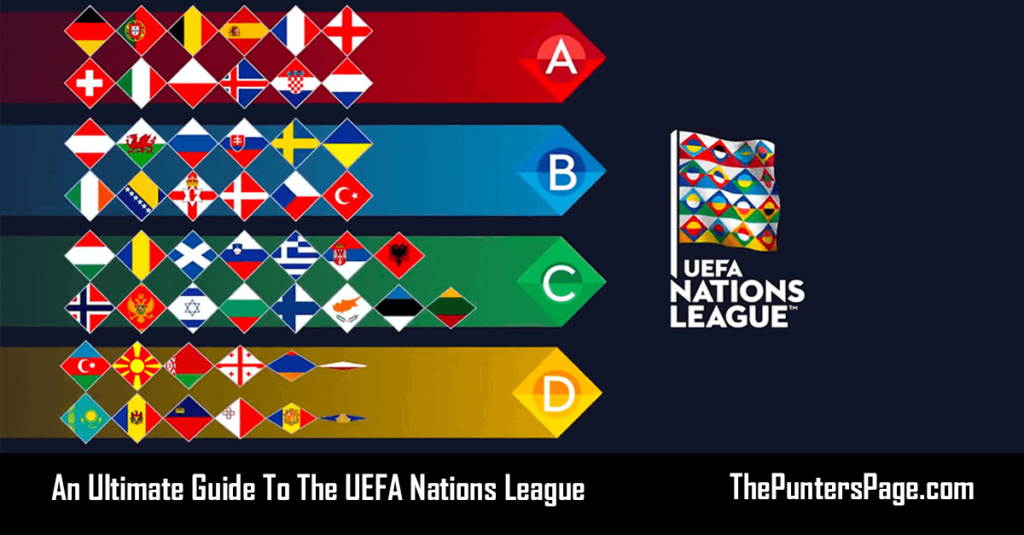
Market Dynamics by Division (Leagues A, B, C, and D)
Odds behavior in the Nations League varies significantly depending on the specific league being analyzed. In 2026, bookmaker algorithms have adjusted their models to capture the motivational differences between elite tiers and developmental groups.
Table: Volatility and Liquidity Matrix by Division
| Division | Liquidity | House Margin | Volatility | Recommended Strategy |
| League A (Elite) | Maximum | 2% – 3% | Low | xG and possession-based models. |
| League B (Promotion) | High | 4% – 5% | Moderate | Value in Asian Handicaps. |
| League C (Development) | Medium | 6% – 8% | High | Over/Under (Goals) markets. |
| League D (Emerging) | Low | 10% – 12% | Very High | Information asymmetry (Niche markets). |
The Motivational Factor: Competitive Intent
In 2026, the Nations League is directly linked to play-off spots for the World Cup and the Euro. This incentive is the primary driver for betting volume.
- Top-tier teams in rebuilding phases: Powerhouse nations often use the group stage to test tactical schemes. Here, “Laying the favorite” (betting against the favorite) in the early rounds often yields a positive Expected Value (EV).
- Mid-tier teams chasing play-offs: Countries that rarely qualify directly see the Nations League as their only viable path. In these cases, defensive intensity and the use of regular starters are at 100%, favoring “Under 2.5 goals” markets due to the high stakes of losing a group lead.
Load Management and Biometrics
Nations League matches are typically played during international windows where players arrive after peak exertion periods with their respective clubs.
- Biomechanical Metrics: In 2026, injury reports and “GPS metrics” from pre-match training sessions are accessible to major betting syndicates. If a team loses both its starting full-backs, markets for “Corners” and “Crosses into the box” suffer immediate corrections.
- The Transcontinental Travel Effect: Despite being a European tournament, many star players compete in leagues in the Americas or Asia. Jet-lag and flight hours are now integrated into performance models for matches played during the Monday/Tuesday window.
Secondary Markets: Cards and Fouls
Officiating in the Nations League tends to be less permissive than in top-tier domestic leagues.
- Card Handicaps: In League C and D matchups, technical disparity often leads to an increase in tactical fouls. Modeling the aggressiveness of the “Underdog” team when playing away from home is one of the most profitable strategies in 2026.
- VAR and Stoppage Time: With new UEFA regulations, “Added Time” markets have gained significant relevance. VAR reviews in matches with less fluid gameplay tend to extend matches beyond 100 minutes, impacting “Goal in the last 10 minutes” markets.
Antepost Markets and the Final Four
When the tournament reaches its final stage (Final Four), the Nations League converts into a knockout mini-tournament similar to the Euro.
- Venue Neutrality: Finals are usually played at a single host venue. This eliminates traditional home-field advantage, forcing betting models to weigh a team’s current “ELO Rating” more heavily than historical head-to-head (H2H) records.
- Extra Time Specialists: As with other UEFA knockout tournaments, the “To Qualify” market is the safest option during the semi-finals, covering the high probability of draws within the 90 minutes of regulation time.
Technology and Real-Time Data Analysis
For the 2026 bettor, using live data visualization tools is indispensable during the Nations League.
- Attack Momentum (Pressure Graphs): Betting platforms now integrate radars showing which team is dominating the final third. During international windows, where play is often less organized, these pressure spikes are leading indicators of imminent goals.
- Blockchain and Transparency: Many operators have migrated their ledgers to decentralized networks to ensure that odds in a tournament with such high disparity as the Nations League are not manipulated by suspicious betting flows in the lower tiers of Leagues C and D.