


The US Open is the “Grand Slam of Energy” and the definitive closing chapter of the major tennis season. In 2026, betting at Flushing Meadows requires an approach centered on mental resilience and high-velocity adaptation. Unlike the grinding clay of Roland Garros or the traditional low bounce of Wimbledon, the US Open is played on Laykold—a hard-court surface that is significantly faster than the plexicushion used in Australia. It is a tournament where power hitters dominate, but where end-of-season burnout creates the highest frequency of Top 10 upsets in the calendar.

The Laykold Surface and Game Velocity
Since the transition to Laykold in 2020, the US Open has maintained a Court Pace Index (CPI) ranging from “Fast” to “Very Fast.”
- Consistent Bounce: Unlike grass, the bounce on Laykold is high and predictable. This heavily favors aggressive ball-strikers who can take the ball at its apex. The “Match Winner” market usually favors players with massive first serves and a dominant “plus-one” forehand strategy.
- Surface Friction: The Laykold surface is highly abrasive, which wears down the felt on the tennis balls quickly. This means the first 2 or 3 games with new balls are critical for big servers. In 2026, professional value is found in betting the “Over on games” in sets that begin with a fresh ball change.
The “New York Humidity” Factor and Night Sessions
The climate in Queens during late August and early September is brutal. It isn’t just the raw heat; it is the relative humidity that often exceeds 70%, creating an “on-court sauna” effect.
- Hydration Depletion: In 2026, tracking a player’s fluid loss and historical performance in high-humidity environments is a key metric. If a player shows signs of cramping or “heavy legs” by the third set of a day match, the “Set Handicap (+)” for the opponent becomes a mandatory position.
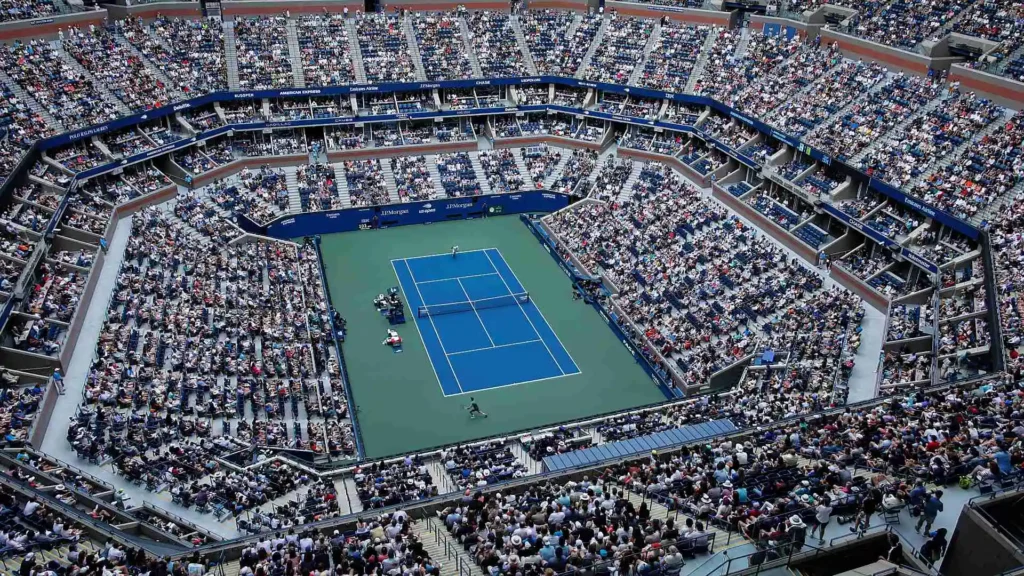
- Night Session Electricity: The night sessions at Arthur Ashe Stadium are the loudest and most electric in sports. Players who thrive on crowd energy (the “showmen”) perform 15% better here than on secondary courts. Betting on American favorites (USA) during night sessions is a statistically profitable trend due to the psychological “home-court” surge.
Strategic Insights: ATP vs. WTA
- ATP (Men’s Draw): As the final Slam of the year, many favorites arrive with “accumulated mileage.” In 2026, statistics show that players who skipped the previous Asian swing or had scheduled rest periods win 60% of their matches against higher-ranked opponents with higher seasonal match counts. The value lies with the “Fresh Legs” players.
- WTA (Women’s Draw): The women’s US Open has historically been the most open of all majors. Value is found in “Outright Winner” odds for players outside the Top 10 who won lead-up tournaments during the summer hard-court swing (Cincinnati or Toronto). Momentum and confidence on cement are more predictive here than historical ranking.
The Impact of Roofs: Arthur Ashe and Louis Armstrong
The US Open features the two largest retractable-roof stadiums in the world, but their use fundamentally alters the physics of the match.
- The Greenhouse Effect: When the roofs are closed due to rain, the AC system struggles to fully strip the humidity, making the air “heavy.” The serve becomes slightly less effective, and rallies tend to lengthen. This is an ideal time to enter the “Over on Rallies of 9+ Shots” market.
- Amplified Noise: The echo under the Arthur Ashe roof is deafening. Players with low distraction tolerance (mental fragility) tend to see a spike in double faults and unforced errors when the stadium is enclosed and the crowd is loud.
Prop Markets and Data Telemetry
- Serve Velocity: The US Open is the tournament for speed records. The market for “Fastest Serve of the Match” is a niche where value can be found by analyzing player history in high-humidity conditions (where the ball is slightly heavier and the air resistance is different).
- Winners vs. Unforced Errors: On this fast court, winners usually outweigh unforced errors for elite players. If a favorite starts a match with a negative ratio (more errors than winners), it is a clear signal for a live “Upset” bet.
Risk Management: End-of-Year Syndrome
- Mental Disconnection: Many players “check out” mentally if they lose the first set in the early rounds, already looking forward to the off-season. The “3-0 Set Betting” market for favorites has more value at the US Open than any other Slam due to this psychological surrender.
- Retirement Rules: Given the high rate of dehydration and impact-related injuries on hard courts, it is critical to use bookmakers with a “1-Set Rule” or “Full Match Rule” that aligns with your specific risk profile for the match.